


The War on the Vulnerable: Canada’s MAID Experiment Ten Years Later

By offering the choice of physician-assisted suicide, we irrevocably take away the chooser's right to make another choice.
Ten years ago, as Canada legalized medical assistance in dying (MAID), I had a conversation with a friend about assisted suicide. After I sent him an article on the subject, he asked why someone should not be allowed to kill herself if she wanted to, particularly if she was physically incapable of doing so. He then asked what the “big picture” was surrounding such issues. I eventually turned part of my response into an essay, “Demolishing Secular Pretensions: Assisted Suicide, the Media, and Relativism.”
A decade later, the same friend is asking me about the “big picture” again. Only now Canada has given us a decade of evidence with which to answer the question. This time our exchange was prompted by the disturbing case of Brigitte Stegemann, an 83-year-old Ontario woman who died through MAID on July 10. When I sent him the story, my friend responded with his characteristic mixture of serious argument, sarcasm, and hyperbole: “Scott, what’s the big deal about euthanasia? …You think it’s bad for the State to fund your murder?” His underlying point was that states have always been implicated in killing. Why become especially outraged when the state’s involvement is simply more direct and obvious?
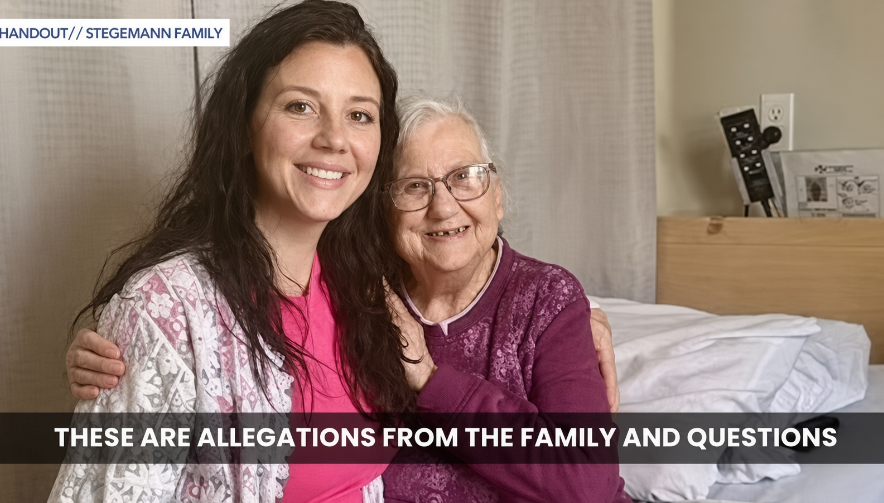
But Stegemann’s case illustrates precisely why we should be concerned. According to her granddaughter and longtime caregiver, Brigitte Kranendonk, Stegemann had previously opposed MAID on Christian grounds. Kranendonk alleges that the process proceeded rapidly while questions remained about her grandmother’s understanding and capacity. Most hauntingly, she says that when she explicitly told her grandmother two days before the scheduled procedure that MAID meant she would die, Stegemann wept and repeatedly said, “I’ve made a mistake.” The circumstances of her death are now under police investigation.
I think this presents a perfect opportunity to look at the “big picture” again.
The details of Stegemann’s case remain contested, and the police investigation should determine what can be established. But her granddaughter Brigitte Kranendonk’s firsthand account raises serious questions about whether the safeguards surrounding an irreversible decision actually protected her grandmother. In a recent interview with Glenn Beck, Kranendonk said that her grandmother had been diagnosed with stage-four stomach cancer in February but was not complaining of pain. “She was living her best life,” she recalled. Days before her death, the two were still “laughing and dancing” and eating ice cream together.
Kranendonk says the first MAID assessment occurred while she was away on vacation and without her knowledge. She returned early for the second assessment, which concerned whether her grandmother possessed the mental capacity to consent to MAID. Although Kranendonk says she had served as her grandmother’s advocate for six years and had routinely participated in decisions concerning her care, she says that during the MAID process she was repeatedly asked to leave the room.
But one claim made by Kranendonk is more disturbing than all the others. This occurred when she asked her grandmother directly whether she understood that the procedure scheduled for Friday meant that she was going to die. At that point, Stegemann broke down crying. For roughly 45 minutes, her granddaughter says, she repeated: “I’ve made a mistake.”
This account has subsequently been reported publicly as part of the controversy surrounding Stegemann’s death. These four words take us beyond the particulars of one disputed case. I believe they expose a problem at the heart of the autonomy argument itself—namely, that human beings change their minds. And autonomy means nothing if the person exercising it does not fully understand the choice being made.
As humans, we reconsider decisions. We are also not immune to misunderstanding what has been explained to us. Despair can dissipate and fear can subside. Circumstances, like states of mind, can change.
For example, someone who attempts suicide and survives may live long enough to regret having tried. One 2024 study of 89 suicide attempts among U.S. Army soldiers found that 33.7 percent of participants subsequently expressed regret over the attempt, while only 11.2 percent were disappointed that they had survived. An earlier study, in 2005, of 393 suicide attempters similarly distinguished between those who were glad to be alive, those who were ambivalent about surviving, and those who still wished they had died. One need not conclude that everyone who attempts suicide inevitably regrets it but, rather, that some do—and, most importantly, that death permanently forecloses that possibility of reconsideration.
However, euthanasia presents us with a terrible unevenness here: the person who survives an attempted suicide can say, “I made a mistake,” whereas the person whose assisted death succeeds does not have the same opportunity.
Stegemann’s case is therefore doubly disturbing because, according to her granddaughter, she did not need an afterward; she allegedly expressed her regret before she died. Kranendonk also alleges that during the assessment the physician used “really loose terms, never using the words death or dying,” prompting her to intervene: “She doesn’t understand what you’re saying.” To make matters worse, Kranendonk maintains that her grandmother’s decision had been based on a fundamental misunderstanding of what MAID would actually do. Even on MAID’s own autonomy-based terms, a system must protect the freedom to withdraw consent as zealously as the freedom to give it.
What happened next raises an obvious question. Kranendonk says she reassured her grandmother that she could still refuse the procedure, something the assessing physician had previously told her as well. Yet, two days later, according to Kranendonk, when the physician arrived to administer MAID, Stegemann did not speak, nod, open her eyes, or otherwise respond when asked about receiving the “medicine.” Kranendonk alleges that the physician nevertheless proceeded. Whether a waiver of final consent existed, and precisely what occurred between Stegemann’s alleged expression of regret on July 8 and her death on July 10, are among the questions that remain unanswered.
I believe that this is particularly significant because Canada’s MAID safeguards ordinarily require the practitioner, immediately before providing MAID, to give the person an opportunity to withdraw the request and ensure that the person gives express consent.
Nor can the problem simply be answered by pointing to safeguards. Stegemann’s is not the only recent case to raise questions about how well those safeguards protect vulnerable people. The family of 26-year-old Kiano Vafaeian, an Ontario man with Type 1 diabetes, significant vision loss, and a history of mental-health struggles who died through MAID in British Columbia in December 2025, has likewise alleged that the system failed to protect him. Vafaeian had previously sought MAID in Ontario, and his eventual approval in British Columbia even prompted questions before a parliamentary committee about possible “doctor shopping and jurisdiction shopping.”
More broadly, The Catholic Register, which had already reported on Stegemann’s case shortly after her death, revealed that British Columbia’s MAID oversight unit recorded 2,807 errors in 2024, with 51.9 percent of reported case outcomes requiring some form of follow-up. Of these, 353 “required practitioners or pharmacists to be educated about MAID’s legal requirements or professional standards.” The British Columbian government counters that serious compliance concerns potentially affecting the integrity of MAID, patient care, or public safety have occurred in only about 0.2 percent of reported cases since 2018. But physician Ramona Coelho identified the fundamental problem with relying upon retrospective oversight: “There should be an independent review before the death, rather than a paperwork review afterward.”
Stegemann’s case gives those words an unsettling resonance. Her family can now seek answers from coroners, regulators, and police. An investigation may eventually determine whether the law and its safeguards were followed. But no retrospective investigation can restore the one thing an erroneous decision to end a life makes impossible: another chance to decide.
And this brings me back to the “big picture” my friend asked about 10 years ago. What began in Canada in 2016 as an exceptional response to grievous and irremediable suffering has become an increasingly significant share of Canadian deaths. In 2024 alone, 16,499 Canadians received MAID, an increase of 6.9 percent over the previous year. By the end of that year, 76,475 people had received MAID since legalization, and MAID accounted for 5.1 percent of all deaths in Canada: approximately one death in 20.
For both Canadian and American readers, another statistic helps put that scale into perspective: the United States recorded 15,364 firearm homicides. Canada, with a population roughly one-eighth the size of the United States, recorded 16,499 MAID provisions during the same year. Given this, one could argue that there is a certain level of moral inconsistency when thousands of firearm deaths are cited as evidence that society must act to protect human life, whereby even prompting calls to curtail or repeal Second Amendment protections, but, regrettably, the even larger number of medically-assisted deaths is defended in the language of “compassion” and “choice.”
The categories are obviously different, but I believe the comparison helps illustrate the extraordinary scale that assisted death has reached in Canada in less than a decade.
There is an equally disturbing historical comparison. More than 66,000 Canadians and Newfoundlanders died in the First World War, and more than 45,000 Canadians and Newfoundlanders died in the Second World War. By the end of 2024, 76,475 people had received MAID in Canada since legalization in 2016, already more than two-thirds of the combined Canadian death toll of both World Wars.
The point is not to equate death in war with assisted death. It is to grasp the sheer magnitude of a practice that barely existed in Canadian law 10 years ago. I have used a similar comparison before. In a 2018 essay on abortion and the sanctity of human life, I compared the enormous number of abortions with the death tolls of the World Wars—again, not to equate unlike circumstances but because familiar historical reference points can make otherwise abstract numbers comprehensible.
Looking back at what I wrote in 2016, many of the concerns I had about Canada’s assisted-suicide experiment have been borne out over the ensuing decade. At the time, I warned: “This does not set a good precedent; things could easily get worse in the foreseeable future.” I also criticized the tendency to end difficult moral questions with the words “that’s his/her choice.” Ten years later, Stegemann’s case raises a logically prior question: What happens when we cannot be certain that the choice was understood, informed, and enduring?
Regardless of what one may conclude about MAID in principle, its appeal to autonomy ultimately depends upon a genuinely informed and voluntary decision. This goes well beyond completing assessments and paperwork. Crucially, it requires confidence that the person fully understands what is being chosen, possesses the capacity to choose it, remains free to withdraw that choice, and knows precisely what will happen if she does not.
Ten years later, as I reflect again upon my friend’s question about the “big picture,” perhaps it is best understood by returning to one vulnerable person. Governments can devise safeguards, physicians can conduct assessments, and legislators can establish eligibility criteria, but none of these measures can undo death.
If Kranendonk’s account is borne out, Brigitte Stegemann’s final days expose the most profound danger in treating an irreversible act as the ultimate expression of autonomy. Human beings can misunderstand. Circumstances can change. And people can change their minds. According to her granddaughter, two days before her death, Stegemann did precisely that. She wept and said, “I’ve made a mistake.”