The resignation of Justin Trudeau from political leadership should have marked a turning point for Canada. For years, Trudeau led this country down a road of moral relativism, economic mismanagement, and escalating hostility toward the Church. But what has followed is not a correction. It is an acceleration. Mark Carney—Canada’s new, unelected Prime Minister—is not a departure from Trudeau’s legacy, but its embodiment in a more polished and professionalized form.
Carney did not rise to power through the people’s will. His Liberal leadership “victory” may sound overwhelming at 85.9%, but it was drawn from just 40% of the party’s membership. In real terms, less than 0.5% of Canadians had any say in the selection of the man now running the country. He holds no seat in Parliament. And yet, with Parliament prorogued until March 24th, he governs without oversight—an affront to the very principles of representative democracy.
His path to a parliamentary seat has been equally revealing. The sitting Liberal MP for Nepean, Chandra Arya—an elected representative since 2015—was quietly removed from candidacy with no public explanation, clearing the way for Carney to run. This backroom maneuver exposes the anti-democratic machinery that undergirds elite politics in Canada today.
Carney’s credentials are, on paper, impressive: former Governor of the Bank of Canada, former Governor of the Bank of England, and an Oxford-educated economist. But behind the résumé lies a worldview shaped not by Catholic social teaching, but by globalist ideology and technocratic control.
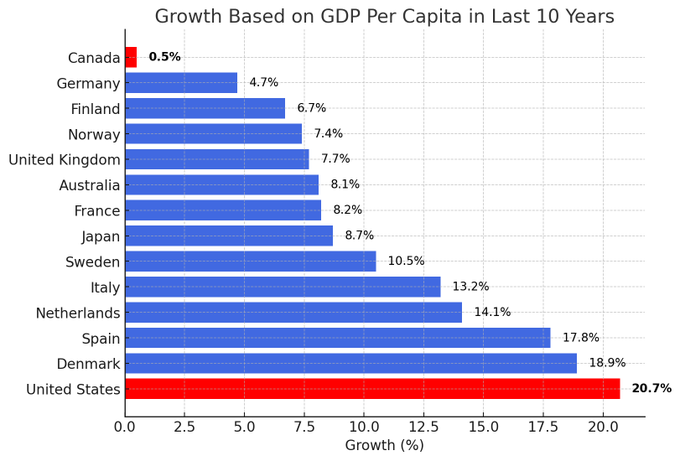
Economically, Carney served as Trudeau’s top advisor during a decade in which Canada’s GDP per capita grew by a mere 0.5%—while countries like Spain and the United States saw growth above 17% and 21% respectively. His proposed solutions? Expansive immigration, carbon taxes, and the so-called “net-zero” agenda—all of which increase the burden on working families and erode national cohesion.
And while he publicly champions climate justice, Carney’s record tells a different story. As vice chair of Brookfield Asset Management, he profited from coal exports to China while the firm moved its headquarters from Canada to the U.S. It is a familiar pattern: one standard for the global elite, another for everyone else.
His hostility to economic decentralization is equally concerning. A vocal critic of Bitcoin and other cryptocurrencies, Carney dismisses them as threats to stability. He’s shown disdain for Bitcoin’s limited supply. Instead, he champions Central Bank Digital Currencies (CBDCs), which would grant governments unprecedented power to monitor and control private transactions. After the Trudeau government froze the bank accounts of peaceful protestors in 2022, we now know how quickly such tools can be weaponized.
Carney himself has declared: “I’m proud to live in a country where a woman’s right to choose is so strongly supported… Our commitment to protecting fundamental rights must be unwavering.” He is referring to abortion. That he frames the killing of the unborn as a “fundamental right” tells us everything we need to know about his understanding of moral truth.
Even within his own family, the ideological influence of this worldview is apparent. Carney’s daughter, Sasha, received treatment at the now-discredited and shut-down Tavistock gender clinic. She now identifies as non-binary and advocates for gender activism. To be clear, we do not know Carney’s personal views on this matter, as he has not publicly addressed it, but he should be asked to clarify his stance. This is not simply a private issue; Sasha’s worldview may provide insight into what could shape future laws and national policy.
Carney is not a Catholic leader. He is not even a neutral one. He is a technocrat committed to global managerialism—a man who substitutes spiritual truths for institutional slogans, who views faith as a private artifact rather than a public foundation. He is Canada’s globalist in chief. His loyalty is not to Church teaching, nor to Canadian sovereignty, but to elite institutions like the World Economic Forum and the United Nations.
A snap election has been called for April 28th. For Catholics, this is not just a political choice—it is a spiritual one. Will we acquiesce to a system that treats human life, truth, and freedom as disposable? Or will we reclaim the moral foundations that once made Canada a country of principle, not performance?
The hour is late, but not yet lost.
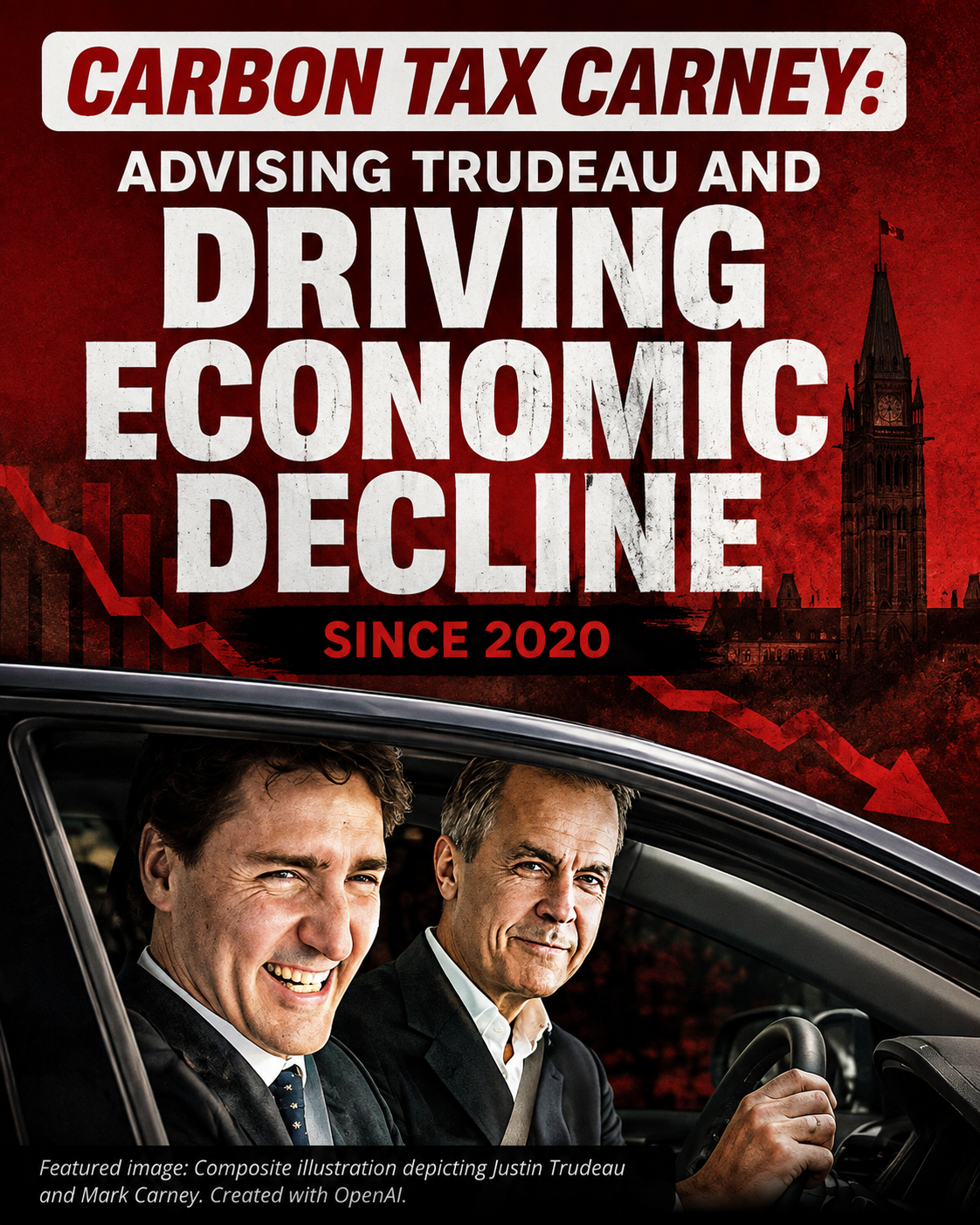
Featured image: AI-generated satirical illustration depicting Justin Trudeau and Mark Carney, created with OpenAI.
Share
3 thoughts on “Trudeau Out, Carney In: The Fight for Canada’s Soul”




Some comments from a Facebook post.
A response to the comment above.
Another response to the previous comment.